
Wembley Park
The Peoples Garden –
A Sculptural Park for the Public
Project Overview
Concept views of ‘The People’s Garden’



‘The People’s Garden’ Proposed Plan

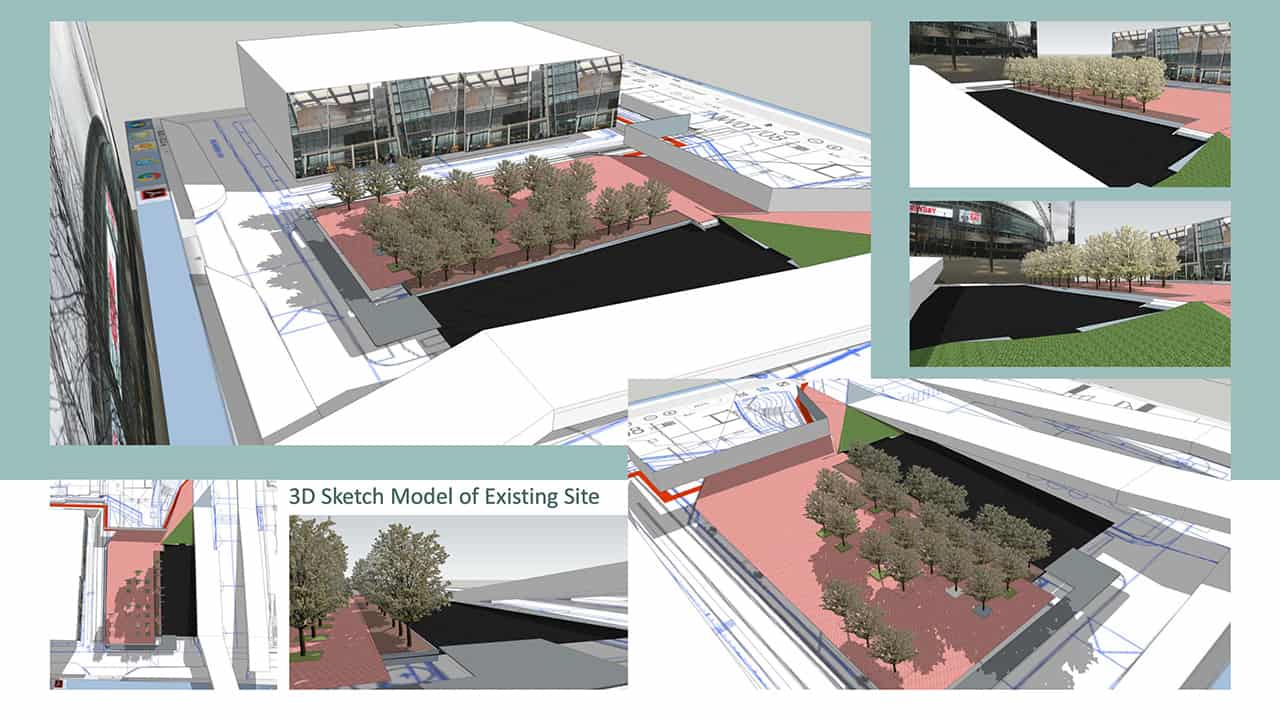
Sculptural Park Proposed Site
Initial Set of Mood Boards


Something that seemed extremely relevant to Wembley and its’ history which truly put this location on the map as the UK’s top sports venue were the Lions that originally guarded the stadium entrances.
These iconic statues which had watched over the country’s home ground in the past and the 3 Lions, England’s official football team emblem were a symbol of Wembley, so it felt important to pay homage to such magnificent creatures.

Social Media Attractions
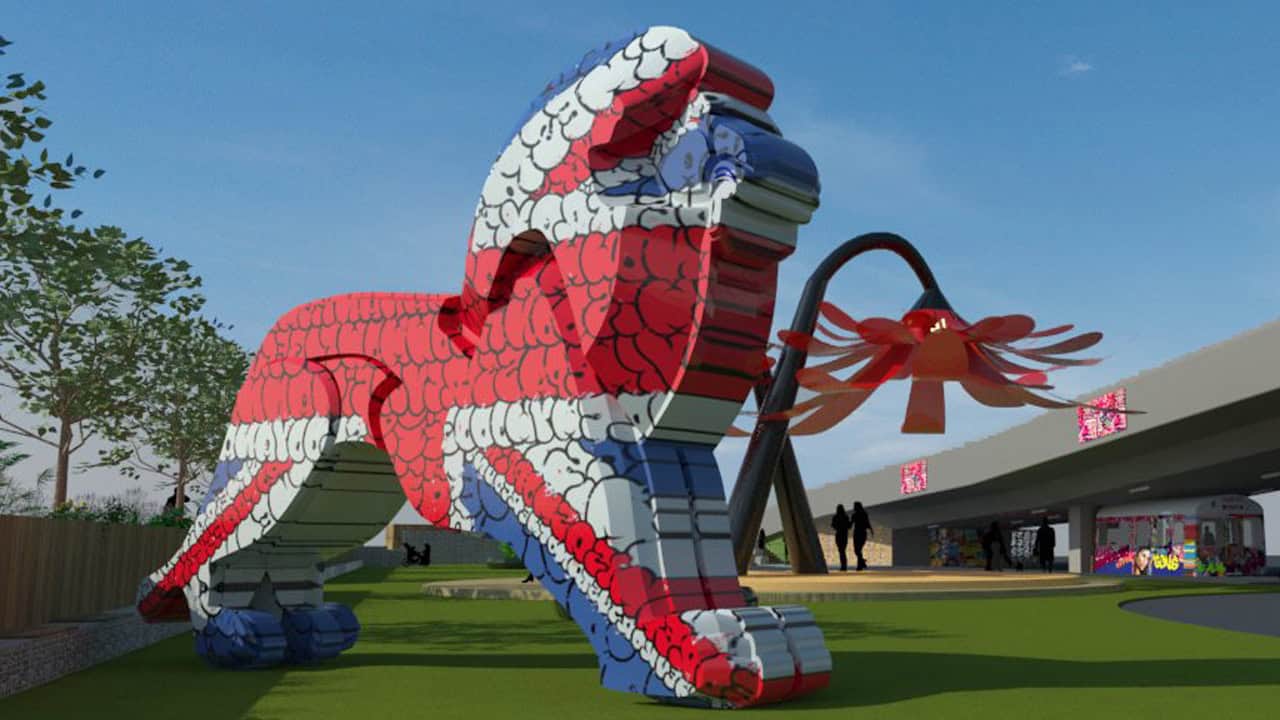
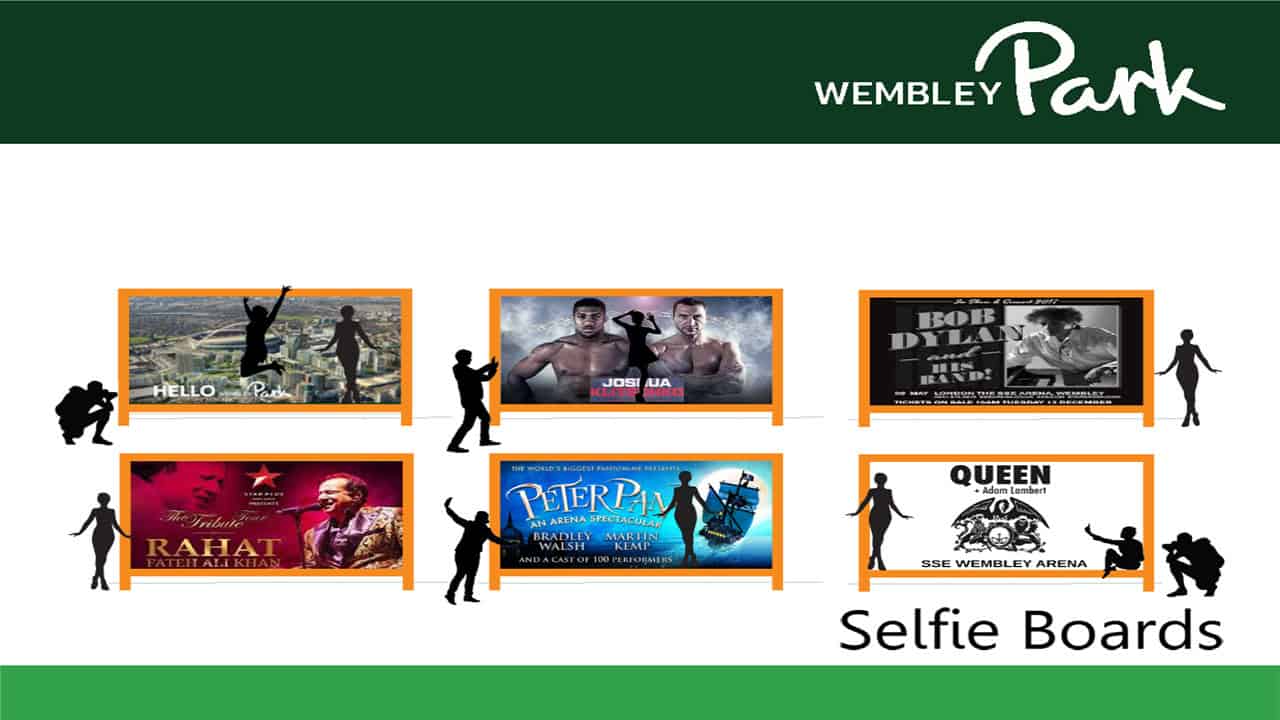
My idea was to create several selfie opportunities within the garden and the surrounding area for members of the public to take photos and share on their social media platforms to help advertise and spread the word about The People’s Garden and the vibrancy of Wembley Park.
This included a 12ft high Lion decorated as the Union Jack directly in front of the stadium, plus various ‘Selfie LED Boards’ promoting upcoming shows and concerts being staged at the Wembley Arena and also the new Troubadour Theatre built on the old site of Fountain TV Studios.
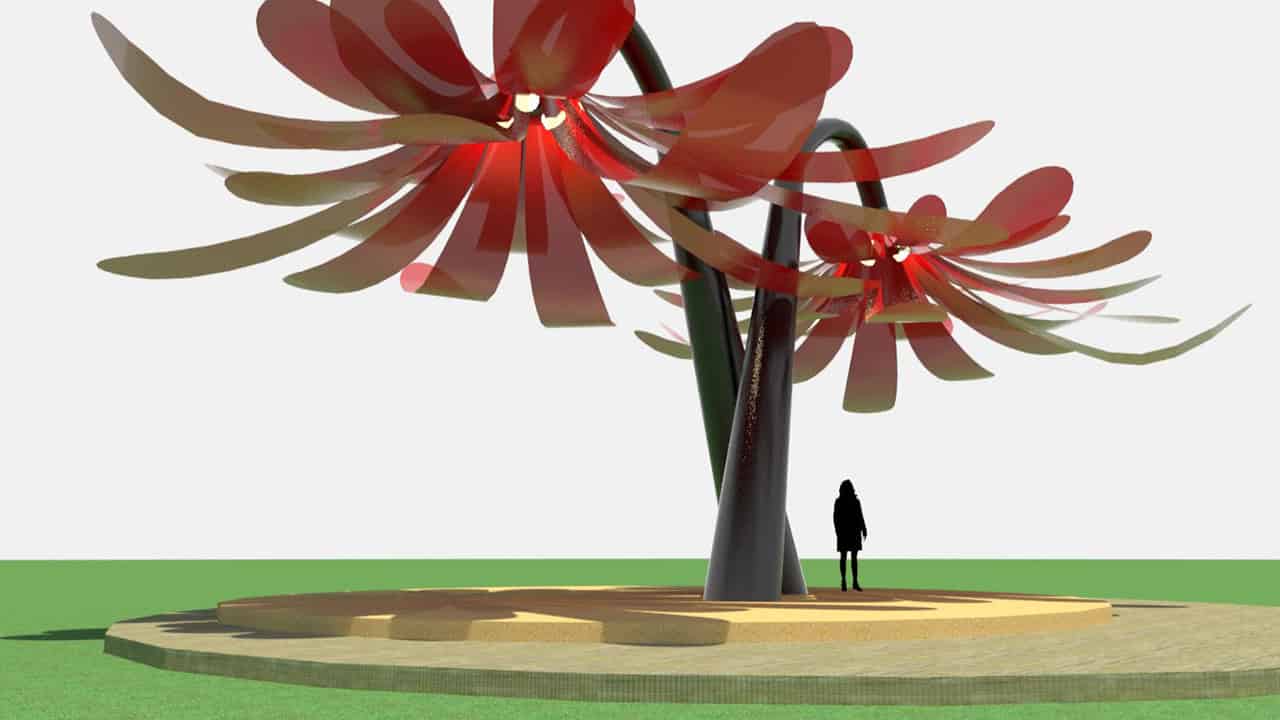
References to a garden in this urban environment were of course a vital aspect in the design and needed to be both a feature as well as blend into the landscape of this sculptural park, so a play on scale was a direction to explore.
Looking at organic form and function to create a canopy of shade, a large ‘Flower’ came to mind. This would be a main focal point in the scheme, providing a stage where impromptu performances could happen and at night would illuminate the area.
Another historical fact about Wembley was that back in the late 1800’s it’s barren lands were developed initially into a pleasure ground which became a popular destination that could only be reached by London’s first ever underground line – the Metropolitan railway.
Wembley Park station opened in 1893 bringing the public direct to the amusement park and in 1924 when the park land was sold to host the British Empire Exhibition this mode of transport became a lifeline to the area, so this needed to be reflected in some way within the design.
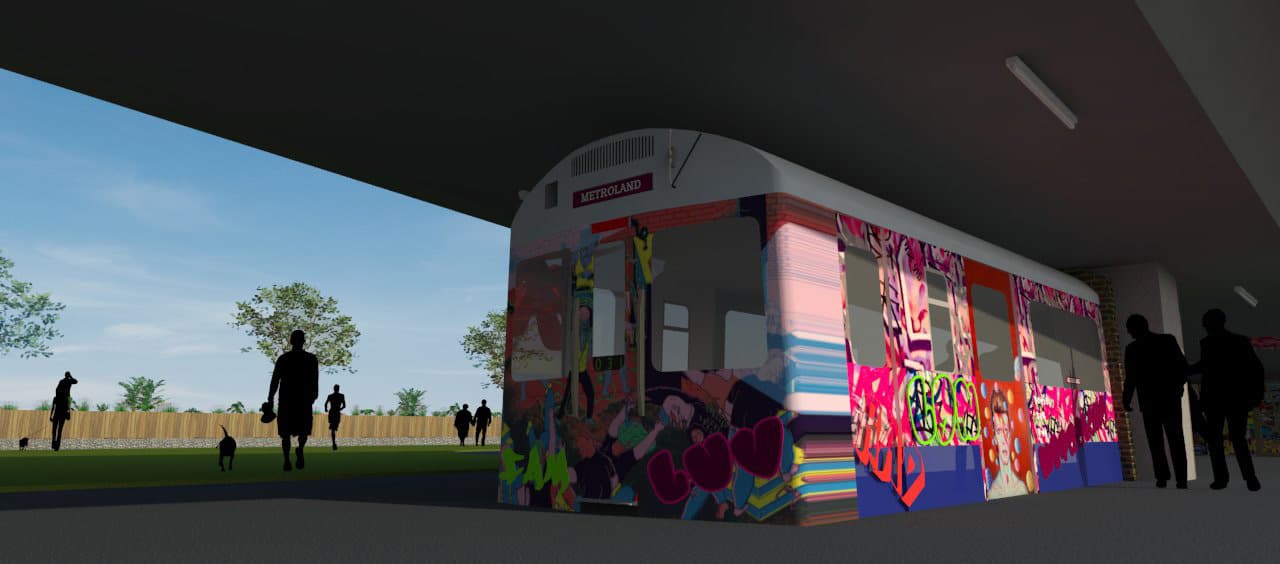
Unfortunately, with 6 months already invested into the project and like many great ideas, ‘The People’s Garden’ had to be downsized since a large portion of the site needed to be recommissioned for commercial construction instead.
Although this reduced the scope of the original proposal it refocused my brief into providing a collection of bespoke public seating areas where people could take a moment to rest and take in the emerging environment around them.